Navigated TMS
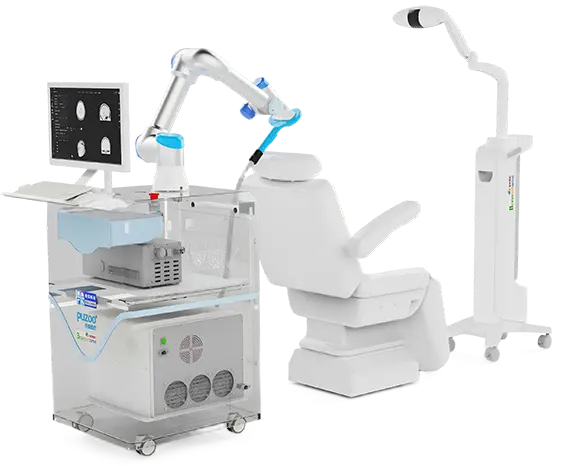
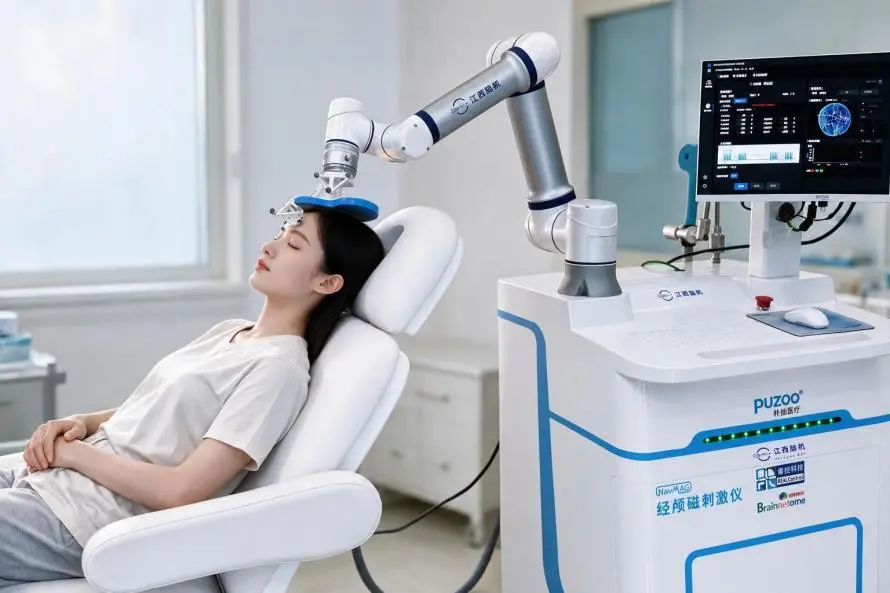
RC-M2N2 series is a neural regulation device developed by China Science Ruikong and Park Zhuo Medical in cooperation with Professor Jiang Tianzai of the Institute of Automation, Chinese Academy of Sciences, which conducts frameless navigation under the guidance of brain network atlas. The energy storage capacitor rapidly discharges to the stimulation coil, and the pulse magnetic field generated by the current in the stimulation coil passes through the skin and skull without trauma or pain, acting on the cerebral cortex, stimulating or inhibiting local neurons in the brain, achieving clinical treatment. On the basis of conventional transcranial magnetic stimulation, the equipment introduces a positioning component composed of an optical positioning camera device and a mechanical arm, integrates the Chinese Academy of Sciences brain network atlas, and draws an individualized brain atlas in combination with the patient's individual image, to achieve millimeter level target positioning and millisecond level dynamic tracking, to achieve the precise regulation of "correct target, correct stimulation" in the clinical treatment of transcranial magnetic stimulation, and to rapidly improve the effectiveness and efficiency of transcranial magnetic stimulation treatment.
videoProduct Advantages

Brain Network Atlas
Integrating the brain network atlas of the Chinese Academy of Sciences, it finely divides 246 brain functional subregions, draws personalized brain atlas based on patient images, and plans personalized treatment targets

Millimeter level positioning accuracy
Positioning offset error<1mm, stable and reproducible target, stable and repetitive implementation of personalized target therapy

Millisecond level dynamic tracking
Real time detection of head movement, real-time motion compensation of the robotic arm, real-time dynamic correction, and reduction of operational errors

Automatic facial recognition registration
Automatically recognize facial landmarks to complete patient registration, simplify the registration process, and significantly improve registration efficiency
What is Transcranial Magnetic Stimulation (nTMS) for Navigation?
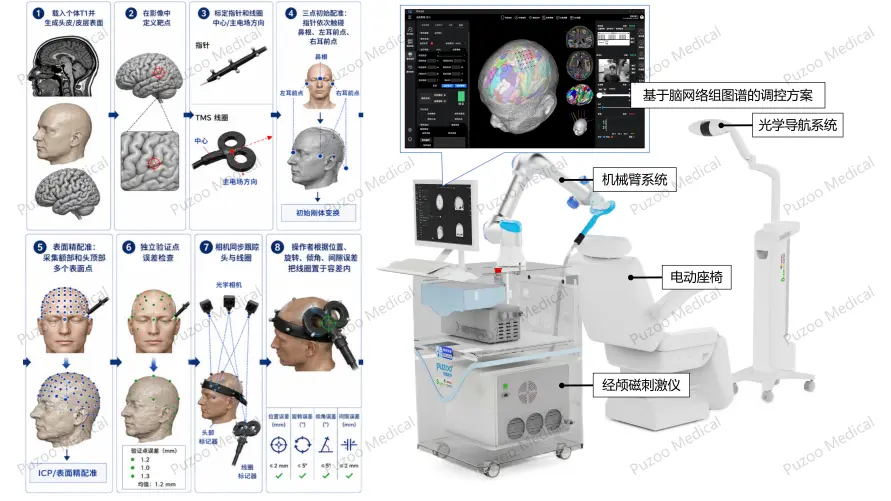
The accuracy of target localization directly affects the therapeutic effect of transcranial magnetic stimulation. Navigation transcranial magnetic stimulation introduces positioning components on the basis of conventional TMS: segmentation, registration, and 3D reconstruction are completed based on individual patient imaging data before treatment, personalized brain maps are drawn, and treatment targets are planned; During treatment, the optical positioning camera device tracks the head position and coil posture in real time, and the robotic arm clamps the coil to follow the target and perform real-time motion compensation, significantly improving the accuracy, stability, and repeatability of treatment. This product uses positioning components to assist in positioning and is used for central and peripheral nervous system stimulation, neurophysiological examination, and neurological function assessment in the human body (including children). It can also be used as an auxiliary treatment for ischemic cerebrovascular disease, neuropathic pain, insomnia, neurasthenia, mild cognitive impairment, and brain injury caused by neurological, psychiatric, and rehabilitation diseases.
Accurate navigation and positioning
·Integrating the brain network atlas of the Chinese Academy of Sciences, 246 brain functional subregions are finely divided to support the refined selection of target names, target attributes, and target selection methods
·Based on individual patient imaging data, complete segmentation, registration, and 3D reconstruction, draw personalized brain maps, and implement personalized treatment plans
·Positioning offset error<1mm, millimeter level precise positioning, stable and reproducible target, ensuring consistency in multiple treatments
·Optical positioning camera device detects head movement in real time, and the robotic arm compensates for movement in a timely manner to avoid off target
·Automatic facial recognition registration, quickly completing coil registration, robotic arm registration, and patient registration, simplifying the process and improving registration efficiency
·Support path simulation, simulate the motion path of the robotic arm in the simulation environment before treatment, safe and controllable
·Automatic positioning and manual positioning can be freely switched, and the positioning status (close/close/positioning) is visually displayed throughout the process
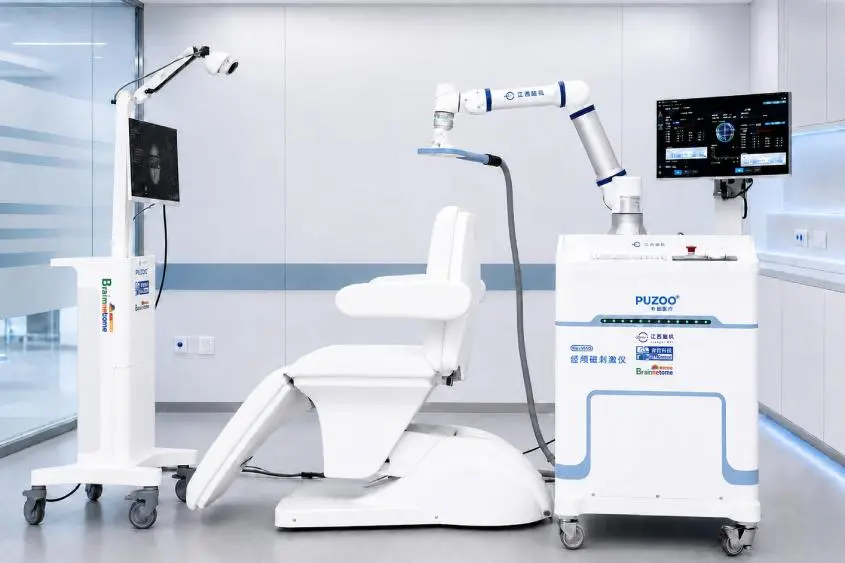
High performance host
·The maximum magnetic induction intensity is 0-7T, with a high rate of change in magnetic field intensity (26-280kT/s) and a large dynamic range
·Dual pulse width of 240 μ s/340 μ s, catering to both clinical and research needs
·Multiple stimulation modes: single transcranial magnetic stimulation (sTMS), repetitive transcranial magnetic stimulation (rTMS), burst transcranial magnetic stimulation (TBS, including iTBS/cTBS)
·The maximum output frequency is 100Hz, and the stimulation intensity, frequency, stimulation time, and interval time can be flexibly adjusted to achieve bidirectional regulation of neural excitability
·Dual cooling of liquid and air, real-time dual temperature monitoring (coil+chassis) and flow rate monitoring, ensuring high-intensity clinical use
·The stimulation coil can achieve stimulation intensity adjustment and single stimulation control, making the operation more convenient
·Integrated host design, simple and convenient to use without direct contact with the human body, avoiding cross infection caused by skin contact
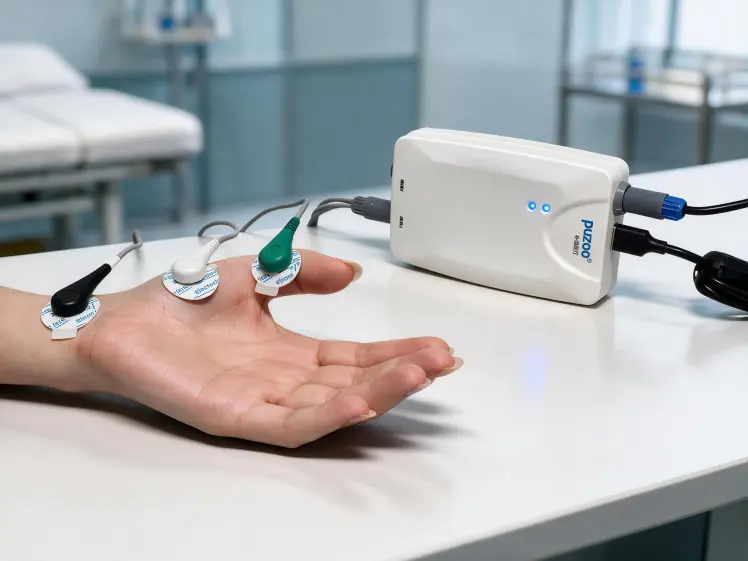
Research grade MEP module
·Dual channel motor evoked potential module, synchronous display and comparative analysis of dual channel electromyographic waveforms
·Three research grade waveform processing functions: low-pass noise reduction, power frequency notch, and filter switch
·Support detection of motor threshold (MT), motor evoked potential (MEP), central conduction time (CMCT), and cortical silence period (CSP)
·Automatic search for resting state movement threshold: 5 out of 10 stimuli with amplitudes between 50-200 μ V are considered as the threshold and automatically calculated and saved
Real time monitoring of electromyographic signals during the treatment process provides objective basis for scientific research and clinical evaluation
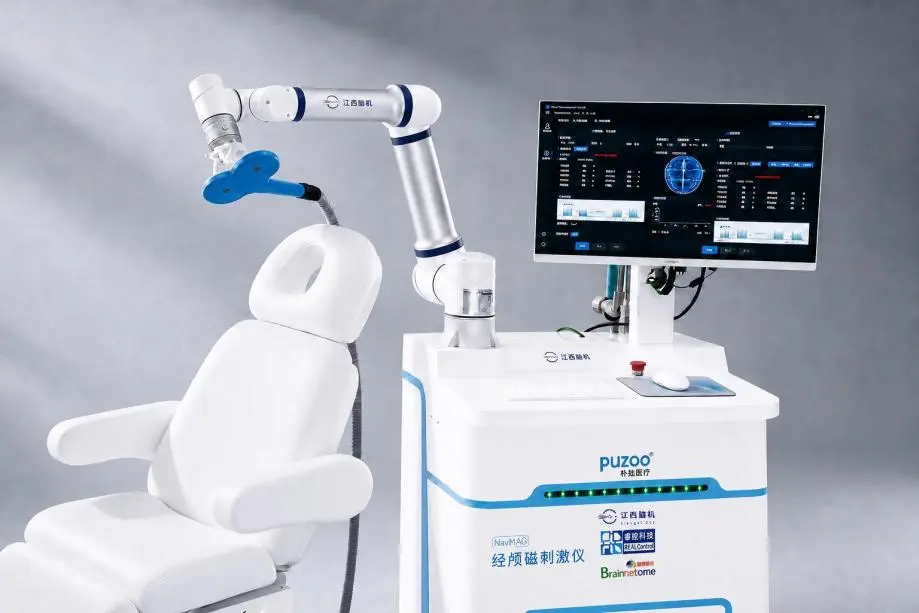
Humanized intelligent management software
Humanized intelligent management software · Five functional modules: patient management, data processing, clinical treatment, settings, about, clear process, no threshold for getting started
·Patient management: adding, viewing, searching, modifying, and deleting patient information, covering basic information, clinical information, medical history, and treatment information
·Data processing: Load individual image data, set scalp segmentation threshold, complete segmentation, registration, 3D reconstruction and preview
·Clinical treatment: integrated target selection, head model marking, registration, positioning, and device control, supporting one click call of electronic prescriptions
·Flexible setting of treatment parameters: rTMS can set intensity, frequency, stimulation time, and interval time; TBS can be set with intra bundle frequency, intra bundle number, inter bundle frequency, and inter bundle number
·Real time recording of treatment data and atlas data, supporting viewing details, printing and exporting, facilitating clinical research and efficacy tracking
·Reserved external triggering interface, which can collaborate with EEG (electroencephalography), fNIRS (near-infrared brain functional imaging) and other devices to support multimodal research