TMS (Children)
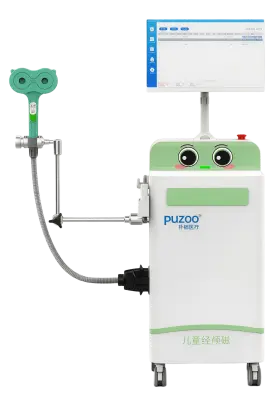
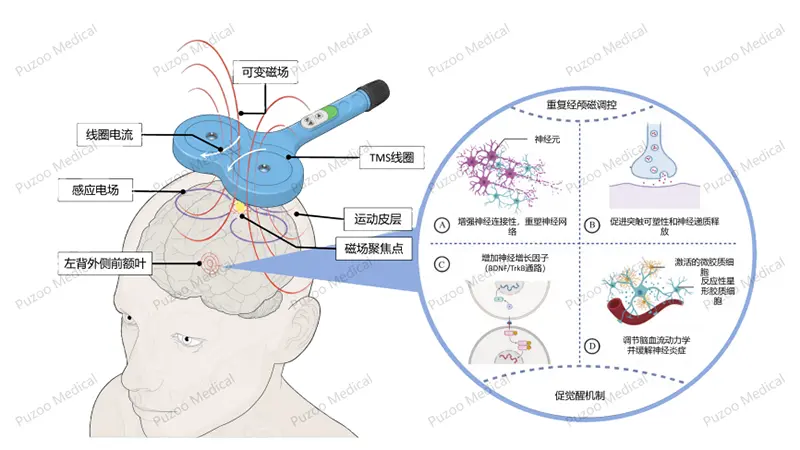
The PZ-TMS-L series is a magnetic field stimulator developed by Puzhuo Medical for children and adolescents. The energy storage capacitor rapidly discharges to the stimulation coil, and the pulse magnetic field generated by the current in the stimulation coil passes through the skin and skull without trauma or pain, acting on the cerebral cortex, stimulating or inhibiting local neurons in the brain, achieving clinical treatment. The expected use of the device is clear, covering central and peripheral nervous system stimulation in adults and children. The maximum output magnetic induction intensity is 1.5T-7T, and the magnetic field intensity change rate is 30-220kT/s. It supports four modes: single, repeated, and explosive transcranial magnetic stimulation and pelvic floor magnetic stimulation. It is equipped with a research grade dual channel motor evoked potential module and a real-time dual temperature and flow rate monitoring system. It also has a built-in child and adolescent specific scale evaluation and cognitive training module, forming a "stimulation evaluation training" closed-loop treatment plan, providing safe and controllable physical therapy options for non pharmacological interventions in children's neurological and psychiatric diseases.
videoProduct Advantages

Children only · Full age coverage
The expected use clearly covers central and peripheral nervous system stimulation in adults and children, and one device can meet the diagnostic and therapeutic needs of both adult departments and pediatric and pediatric rehabilitation departments
Full coverage of stimulus detection
sTMS、rTMS、TBS、 Four modes of pelvic floor magnetic stimulation are combined in one machine, with synchronous support for four neurophysiological tests including MT, MEP, CMCT, and CSP, achieving integrated treatment and evaluation

Child safety priority design
Built in power limit meter, automatically constrains stimulation time and interval time according to intensity and frequency; Real time monitoring of the temperature of the host and coil, as well as the flow rate of the coolant. If it exceeds the limit, an alarm will be triggered and the machine will be shut down

Evaluate the training loop
Built in psychological comprehensive, child and adolescent assessment, emotional, sleep and other multidimensional scales and cognitive training tasks, objectively evaluate the efficacy and continuously strengthen the treatment effect
Why do children and adolescents need exclusive neural regulation programs?
The brains of children and adolescents are in a stage of continuous development, and there are differences in cortical excitability, synaptic plasticity, and skull structure compared to adults, so adult parameters cannot be simply applied. In recent years, the application of TMS in the field of pediatric psychiatry has gradually gained recognition: the US Food and Drug Administration (FDA) has approved related devices for the treatment of severe depression in adolescents aged 15 and above, and further approved theta burst stimulation (TBS) in 2022; Public research shows that rTMS has exploratory applications in areas such as depression, obsessive-compulsive disorder, attention deficit hyperactivity disorder (ADHD), autism spectrum disorder (ASD), and tic disorders in children and adolescents. The response and relief rates of adolescent depression are encouraging.
Compared with drugs, TMS does not affect the whole body, does not cause systemic side effects such as weight gain and drowsiness, and treatment can be completed in the outpatient department. After completion, normal activities and school can be resumed. At the same time, the attention span of young people is limited and their tolerance is relatively weak. Short term programs such as TBS have shorter single stimulation times and are more suitable for children's treatment scenarios. It should be emphasized that TMS therapy for children must be implemented by professionals trained by the manufacturer under strict screening and parameter constraints.
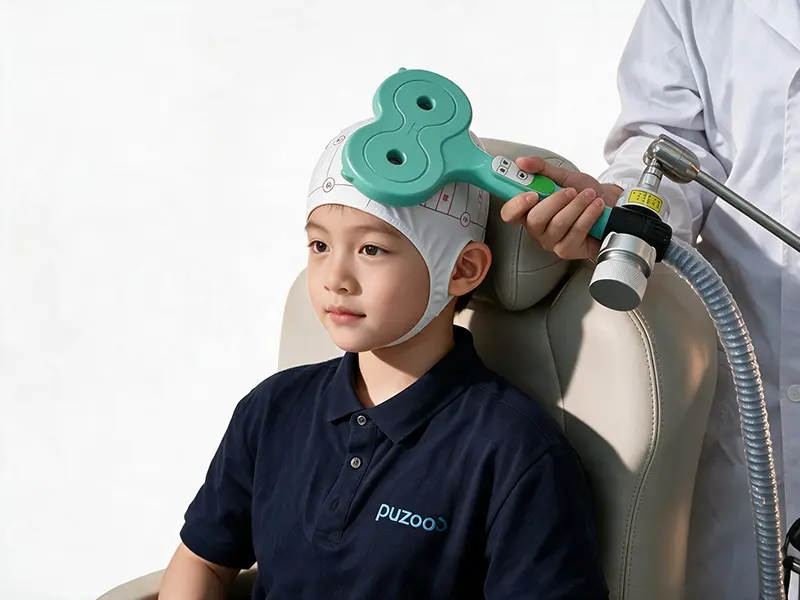
Four stimulation modes with full spectrum coverage
Single‑pulse Transcranial Magnetic Stimulation (sTMS): Single‑pulse output, applied for motor threshold measurement and cortical functional localization.
Repetitive Transcranial Magnetic Stimulation (rTMS): Parameters including intensity, frequency, stimulation duration and inter‑stimulus interval can be configured, or built‑in pediatric‑specific electronic prescriptions can be selected. Bidirectional modulation of neural excitability is achieved by adjusting stimulation frequency and intensity.
Theta‑Burst Transcranial Magnetic Stimulation (TBS): Also known as Theta‑burst stimulation, available in iTBS and cTBS modes. It delivers high‑efficiency stimulation within a short duration and better fits the tolerance characteristics of children.
Pelvic Floor Magnetic Stimulation (MS): Electronic prescriptions are selectable. Users can set intensity, 10 groups of distinct stimulation frequencies, intermission time, repetition cycles and treatment sites, covering brain‑peripheral circuit modulation.
Four Neuroelectrophysiological Tests: Motor Threshold (MT), Motor‑Evoked Potential (MEP), Central Motor Conduction Time (CMCT), and Cortical Silent Period (CSP).
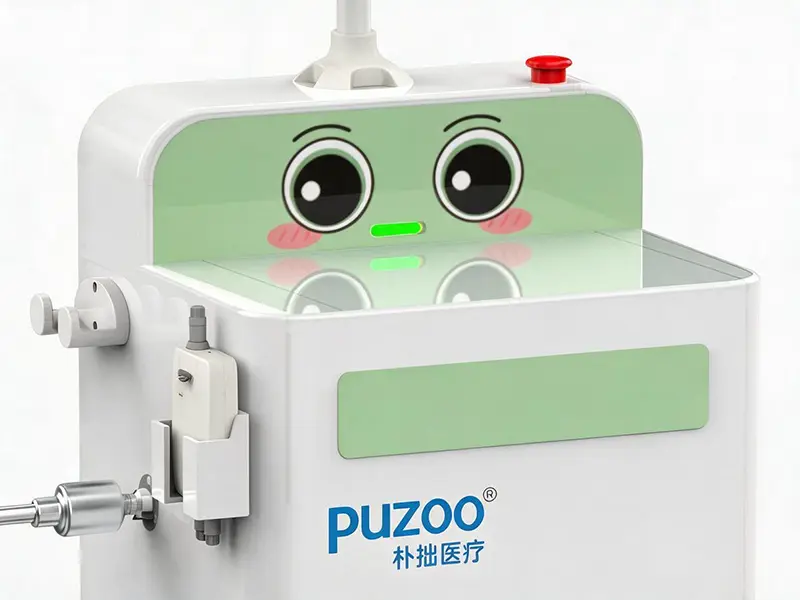
High performance host · Intelligent temperature control
Cartoon‑styled Main Unit: Special chassis appearance for pediatric use to improve children's treatment compliance.
Wide‑range Magnetic‑field Output: Maximum output magnetic‑induction intensity of 1.5 T~7 T, magnetic‑field slew‑rate of 30~220 kT/s, offering a large dynamic range.
Dual Pulse‑width Options: Two levels of 240 μs and 340 μs, precisely matching different coils and treatment protocols.
Dual Real‑time Temperature Monitoring: Synchronous real‑time temperature monitoring for both main unit and coil. Coil surface temperature ≤41 °C. Automatic alarm and output shutdown will be triggered when main‑unit temperature ≥71 °C or coil temperature ≥41 °C. Treatment can only resume after temperatures drop back to ≤50 °C (main unit) and ≤35 °C (coil).
Real‑time Flow‑rate Monitoring · Liquid‑cooling Heat Dissipation: Dual heat‑dissipation with liquid cooling plus air cooling; safety status is clearly displayed.
Direct On‑coil Operation: Stimulation intensity adjustment and single‑pulse control can be performed directly on the stimulation coil for more convenient operation.
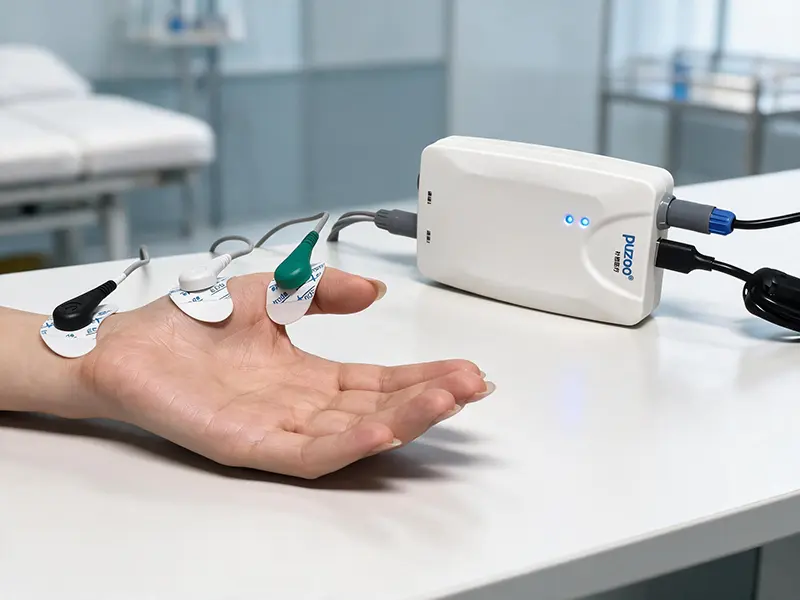
Research grade dual channel MEP module
Dual‑channel Synchronous Acquisition: Equipped with a dual‑channel motor‑evoked potential module. Free selection between Channel 1 / Channel 2 is supported to meet bilateral‑comparison and scientific‑research requirements.
Three Waveform Processing Functions: Low‑pass noise reduction, power‑frequency notch filtering and filter on‑off switch, which effectively suppress interference and improve the signal‑to‑noise ratio.
Real‑time EMG Recording During Treatment: Enable the data‑monitor switch during repetitive transcranial magnetic stimulation treatment. EMG data is acquired once per minute, with real‑time recording of latency, maximum value, amplitude and time points.
Standardized Threshold Measurement: Three recording modes are available for abductor pollicis brevis, first dorsal interosseous muscle and tibialis anterior muscle. The motor threshold is determined by the criterion that 5 out of 10 stimulation‑evoked MEP amplitudes fall within 50~200 μV. Data and waveform graphs can be saved.
Multi‑device Collaboration: A reserved external trigger interface enables compatibility with instruments such as EEG (electroencephalogram) and fNIR (functional near‑infrared brain imaging), supporting multimodal research.
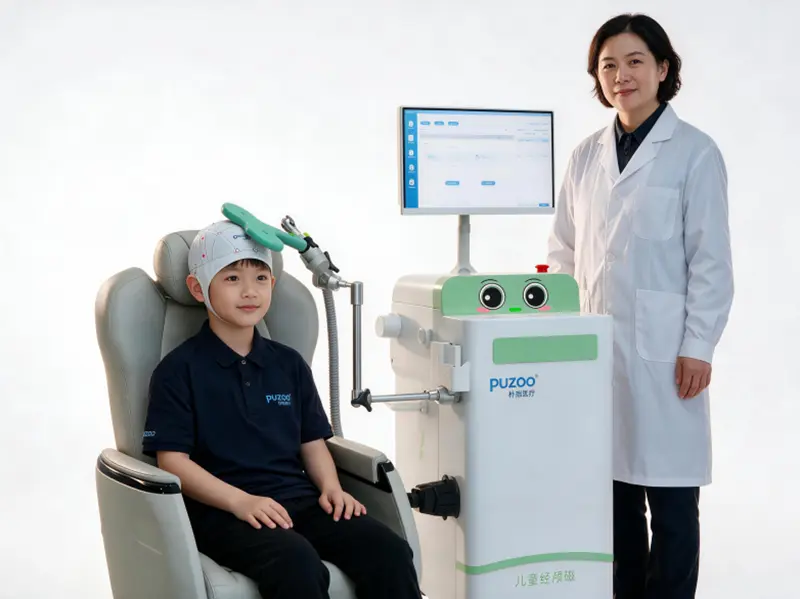
Special management software for children and adolescents
Five Major Software Modules: Case Management, Assessment & Training, Clinical Detection, Clinical Treatment and System Settings, featuring clear workflow and easy‑to‑operate interface.
Case Management: Support adding, refreshing, querying, editing, deleting and batch‑deleting patient information. Treatment‑course information can be added, with one‑click jump to interfaces of clinical treatment, assessment‑training and treatment records.
Electronic Prescriptions: Existing electronic prescriptions can be adopted for treatment parameters, or users can customize and save parameters as new prescriptions for quick subsequent recall. Adding, sorting, editing and deleting prescriptions are supported.
User‑friendly Human‑machine Interaction: Built‑in medical‑record management and treatment positioning diagrams. Treatment can be started, paused or terminated at any time. Real‑time feedback data during treatment is displayed clearly at a glance.
Multi‑dimensional Scale Assessment: Multiple built‑in scales cover comprehensive psychology, elderly assessment, child and adolescent assessment, emotion, sleep and other dimensions, assisting operators in objectively evaluating patients’ conditions and therapeutic effects.
Closed‑loop Treatment Protocol: Form a "Stimulation‑Assessment‑Training" closed loop. Scale assessment objectively evaluates treatment outcomes, and cognitive training continuously strengthens therapeutic effects.
Data Sharing Among Devices: Support data sharing among devices. Patients can receive treatment on different devices under unified data management, making group treatment available.