TMS (Adult)
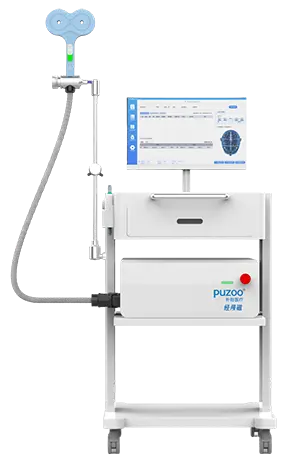
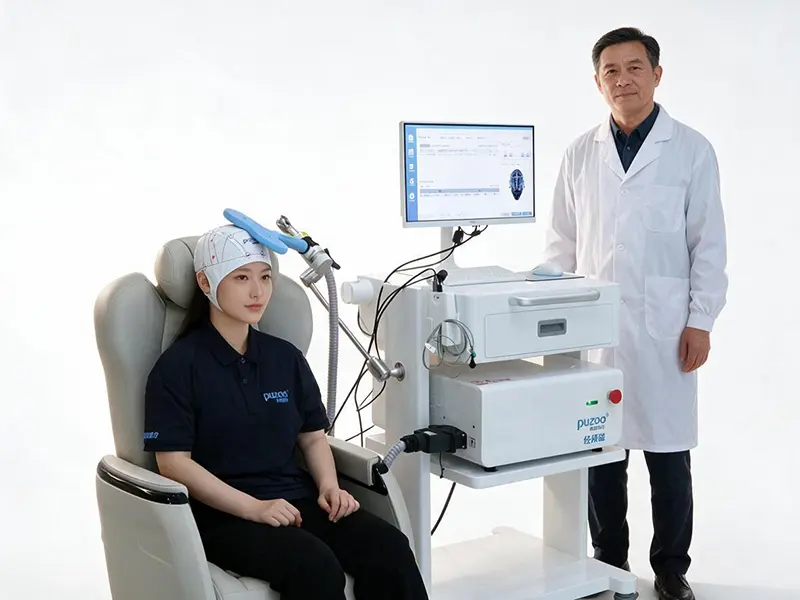
The PZ-TMS-L Pro series is a new generation magnetic field stimulator independently developed by Puzhuo Medical. The energy storage capacitor rapidly discharges to the stimulation coil, and the pulse magnetic field generated by the current in the stimulation coil passes through the skin and skull without trauma or pain, acting on the cerebral cortex, stimulating or inhibiting local neurons in the brain, achieving clinical treatment. The company has optimized and upgraded the host performance, MEP module, TMS management software, and stimulation coil based on the latest version of electrical safety standards, which better meets the needs of clinical and scientific research. The maximum output magnetic induction intensity of the device is 1.5T~7T, and the magnetic field intensity change rate is 30~220kT/s. It supports four modes: single, repeated, and explosive transcranial magnetic stimulation and pelvic floor magnetic stimulation. It is equipped with a research grade dual channel motion evoked potential module and an intelligent temperature control system, and has a built-in multidimensional measurement evaluation and cognitive training module, forming a "stimulation evaluation training" closed-loop treatment plan.
videoProduct Advantages
Full coverage of stimulus detection
sTMS、rTMS、TBS、 Pelvic floor magnetic stimulation with four modes simultaneously supported by MT, MEP, CMCT, and CSP neurophysiological testing

High performance host
Maximum magnetic induction intensity of 1.5T~7T, magnetic field change rate of 30-220kT/s, dual temperature and flow rate real-time monitoring, liquid cooling heat dissipation ensures continuous operation
Research grade dual channel MEP module
Dual channel synchronous acquisition, three waveform processing, real-time recording of electromyography during treatment, reserved external trigger interface compatible with EEG and fNIRS

Flexible combination of multiple stimulation coils
Up to 14 registered coils to choose from, meeting both clinical and research needs
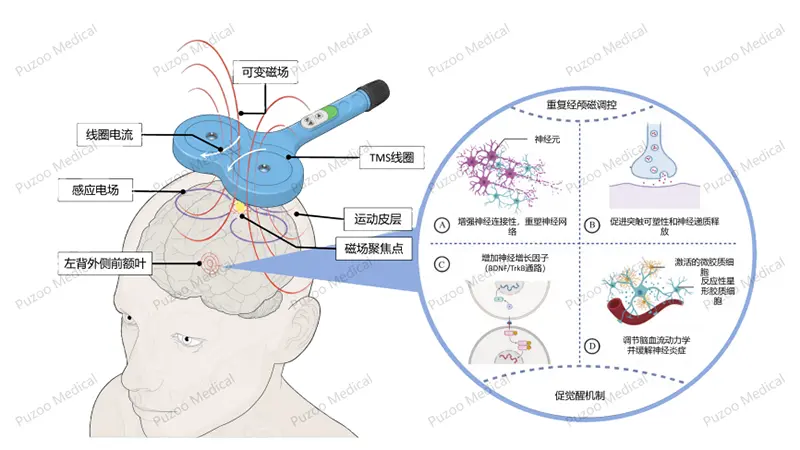
What is Transcranial Magnetic Stimulation (TMS) technology?
TMS is a focused, painless, and non-invasive brain stimulation technique. It utilizes the principle of electromagnetic induction to generate a magnetic field that can penetrate the scalp and skull, inducing small currents in specific areas of the brain to "awaken" or "inhibit" nerve cells. Appropriate stimulation can also regulate the neural function of the brain, modulating the excitability of the nervous system through synaptic reflexes; It can also stimulate peripheral nerves and regulate the excitability of peripheral nerves and muscles.
As a non-invasive, targeted, and reversible brain circuit intervention tool, TMS is mainly used for clinical treatment in psychiatry, neurology, rehabilitation, obstetrics and gynecology, pediatrics, and geriatrics, as well as for studying the functional division of different regions of the brain. The pulsed magnetic field emitted by TMS is different from the radiation emitted by X-ray machines and CT machines, and has no radiation.
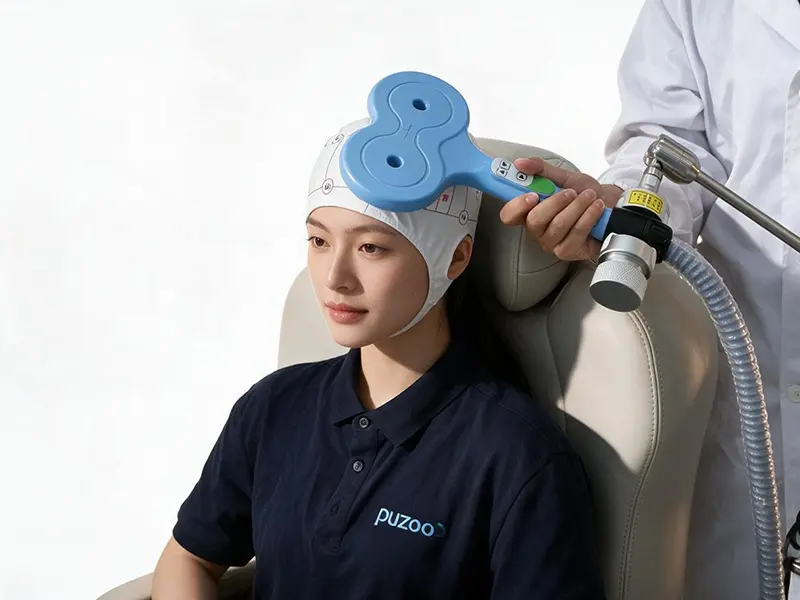
Four stimulation modes with full spectrum coverage
Single‑pulse Transcranial Magnetic Stimulation (sTMS): Single‑pulse output for motor threshold measurement and cortical functional localization.
Repetitive Transcranial Magnetic Stimulation (rTMS): Parameters such as intensity, frequency, stimulation duration and interstimulus interval can be set, or built‑in electronic prescriptions can be selected. Bidirectional modulation of neural excitability is realized by adjusting stimulation frequency and intensity.
Theta‑Burst Transcranial Magnetic Stimulation (TBS): Also known as Theta‑burst stimulation, it includes iTBS and cTBS modes and can deliver high‑efficiency stimulation within a short duration.
Pelvic Floor Magnetic Stimulation (MS): Electronic prescriptions are available. Users may set intensity, 10 groups of different stimulation frequencies, intermission time, repetition cycles and treatment sites to realize modulation of brain‑peripheral circuits.
Four Neuroelectrophysiological Tests: Motor Threshold (MT), Motor‑Evoked Potential (MEP), Central Motor Conduction Time (CMCT), and Cortical Silent Period (CSP).
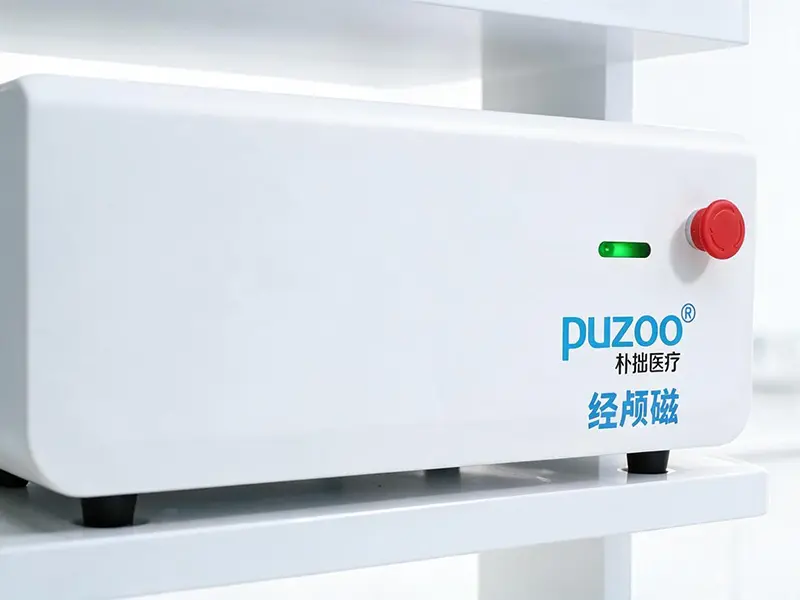
High performance host · Intelligent temperature control
Wide‑range Magnetic‑field Output: Maximum output magnetic induction intensity of 1.5 T~7 T, magnetic field slew rate of 30~220 kT/s with a wide dynamic range.
Dual Pulse‑width Options: Two options of 240 μs and 340 μs, precisely matching different coils and treatment protocols.
Dual Real‑time Temperature Monitoring: Synchronous real‑time temperature monitoring for the main unit and coil. Coil surface temperature ≤41 °C. Automatic alarm and output cutoff will be triggered when the main unit temperature ≥71 °C or coil temperature ≥41 °C. Treatment can resume only after the temperatures drop to ≤50 °C (main unit) and ≤35 °C (coil) respectively.
Real‑time Flow‑rate Monitoring · Liquid‑cooling Heat Dissipation: Dual heat dissipation combining liquid cooling and air cooling, with clear visualization of safety status.
Direct On‑coil Operation: Stimulation intensity adjustment and single‑pulse control can be performed directly on the stimulation coil for easier operation.
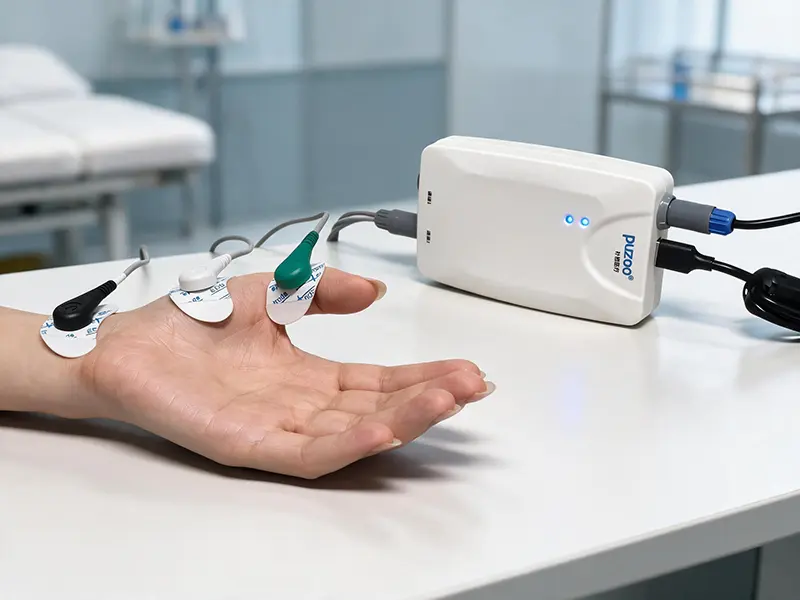
Research grade dual channel MEP module
Dual‑channel Synchronous Acquisition: Equipped with a dual‑channel motor evoked potential module. Free selection between Channel 1 / Channel 2 is supported to meet bilateral comparison and scientific research requirements.
Three Waveform Processing Functions: Low‑pass noise reduction, power frequency notch filtering and filter switch, which effectively suppress interference and improve the signal‑to‑noise ratio.
Real‑time EMG Recording During Treatment: Turn on the data monitoring switch during repetitive transcranial magnetic stimulation treatment. EMG data is collected once per minute, and latency, maximum value, amplitude and time points are recorded in real time.
Standardized Threshold Measurement: Three recording sites are available: abductor pollicis brevis, first dorsal interosseous muscle and tibialis anterior muscle. The motor threshold is determined by the criterion that amplitudes of 5 out of 10 evoked motor potentials fall within 50~200 μV. Data and waveform graphs can be saved.
Multi‑device Collaboration: A reserved external trigger interface enables integration with instruments such as EEG (electroencephalogram) and fNIR (functional near‑infrared brain imaging) to support multimodal research.
Humanized management software
Five Major Software Modules: Case Management, Assessment & Training, Clinical Detection, Clinical Treatment and System Settings, featuring clear workflow and easy operation.
Case Management: Supports adding, refreshing, querying, editing, deleting and batch deleting patient information. Treatment course information can be added, with one‑click jump to interfaces of clinical treatment, assessment & training and treatment records.
Electronic Prescriptions: Existing electronic prescriptions can be selected for treatment parameters, or parameters can be customized and saved as prescriptions for quick subsequent recall. Adding, sorting, editing and deleting prescriptions are supported.
User‑friendly Human‑machine Interaction: Built‑in medical record management and treatment positioning diagrams. Treatment can be started, paused or terminated at any time. Real‑time feedback data during treatment is displayed clearly at a glance.
Multi‑dimensional Scale Assessment: Multiple built‑in scales cover comprehensive psychology, elderly assessment, child and adolescent assessment, emotion, sleep and other dimensions, assisting operators in objectively evaluating patients’ conditions and therapeutic effects.
Closed‑loop Treatment Protocol: Form a "Stimulation‑Assessment‑Training" closed loop. Scale assessment objectively evaluates treatment outcomes, and cognitive training continuously strengthens therapeutic effects.
Data Sharing Between Devices: Supports data sharing between devices. Patients can receive treatment on different devices with unified data management, enabling group treatment.