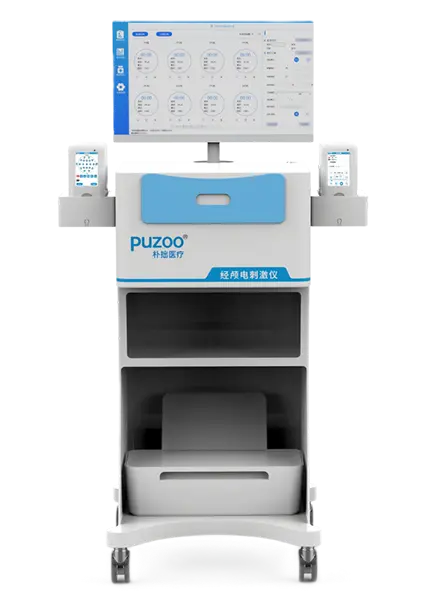
TES (Trolley)
The PZ-TES series transcranial electrical stimulation device is a new generation of transcranial electrical stimulation equipment independently developed by Puzhuo Medical. The device applies low-intensity current (0-2500 μ A) to a specific target area on the scalp through electrodes, non invasively regulating the excitability of cortical neurons, regulating EEG rhythms, promoting neural remodeling and repair, improving brain blood supply, and achieving clinical treatment. The product is equipped with evidence-based medicine treatment prescriptions, supporting both conventional (2-channel) and high-precision (5-channel) treatment modes, and integrating evaluation and training modules, which better meet the needs of clinical and scientific research.
videoProduct Advantages
High precision current output
0~2500μA、 Step 10 μ A fine adjustable, 5-channel HD high-precision treatment mode, supporting clinical precision treatment

8 stimulation modes
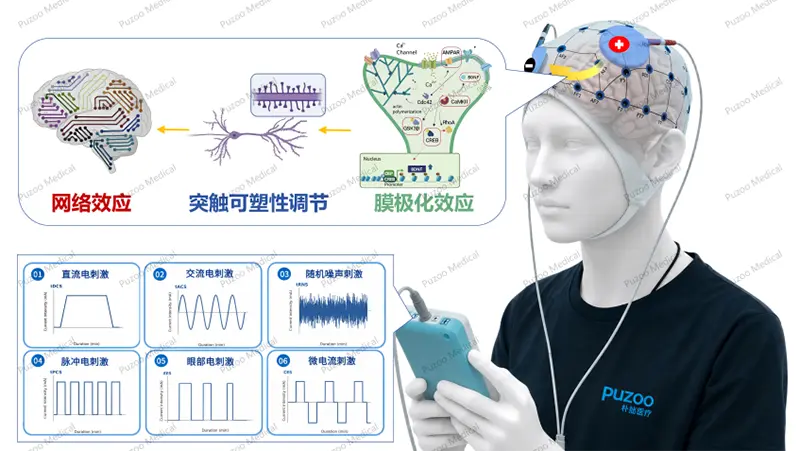
Covering transcranial direct current stimulation (tDCS), transcranial alternating current stimulation (tACS), transcranial random noise stimulation (tRNS), transcranial pulse electrical stimulation (tPCS), eye electrical stimulation (EES), and microcurrent stimulation (CES), this machine meets different treatment needs

Intelligent handheld terminal
Touch screen+button dual interaction, lithium battery power supply, support fast charging, uninterrupted treatment after disconnection

Fusion evaluation training
LAN data sharing, controlling up to 12 terminal hosts simultaneously, enabling batch grouping and group therapy
What is transcranial electrical stimulation (TES) technology?
TES is a non-invasive brain stimulation technique. It uses low-intensity current (usually 0-2.5mA) to stimulate the target area of the cerebral cortex, by changing the neuronal membrane potential (anode increases neuronal excitability, while cathode (negative electrode) stimulation inhibits neuronal excitability).
As a non-invasive, controllable, and reversible neural circuit intervention tool, transcranial electrical stimulation is mainly used for the treatment of motor dysfunction, language and cognitive disorders, and swallowing disorders caused by rehabilitation, geriatrics, psychiatry, and neurological diseases. It also assists in the treatment or relief of insomnia symptoms, and has built-in evaluation and training software for the auxiliary treatment of mild cognitive impairment.
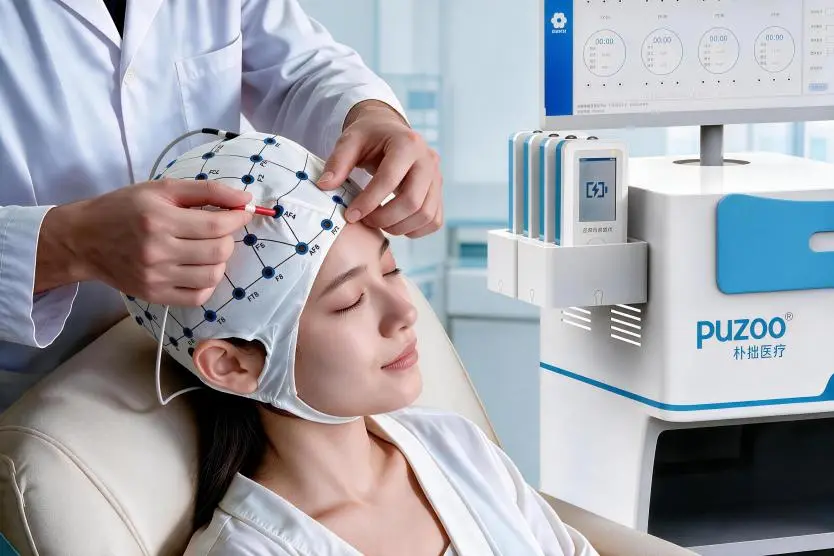
High precision current output
·The current intensity ranges from 0 to 2500 μ A, with fine adjustment in steps of 10 μ A, to meet the personalized and precise treatment needs
·Conventional treatment mode (2 channels)+high-precision treatment mode (5 channels), flexibly matching different clinical scenarios
·Real time impedance detection, providing electrode detachment warning function to ensure the safety of the treatment process
·Mainstream modes such as transcranial direct current stimulation (tDCS), transcranial alternating current stimulation (tACS), transcranial random noise stimulation (tRNS), transcranial pulse electrical stimulation (tPCS), microcurrent stimulation (CES), etc., with a unique eye electrical stimulation (EES) machine to meet different treatment needs
·Pre stimulation mode prepares patients before treatment, while pseudo stimulation mode assists in efficacy comparison evaluation
·Built in multi domain evidence-based medicine treatment prescriptions for quick extraction and convenient use
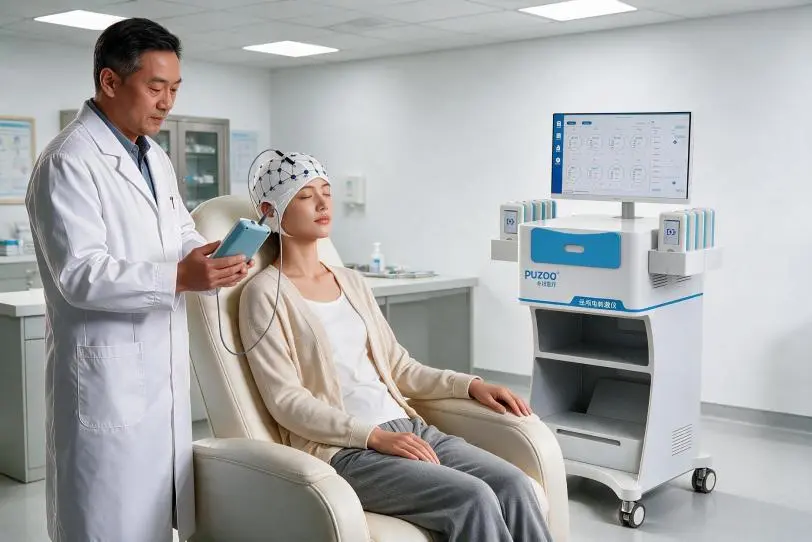
Intelligent handheld terminal
·Touch screen+button dual interaction mode, intuitive and convenient operation
·Real time display of patient information, treatment mode, stimulation intensity, treatment time, and real-time impedance
·Rechargeable lithium battery power supply, supports fast charging, strong endurance, and can work continuously for a long time
·Offline work function: After the terminal is disconnected from the host, it can independently complete the set treatment plan without interruption
·Automatically turn off output when exceeding the safe current threshold, with multiple safety protections
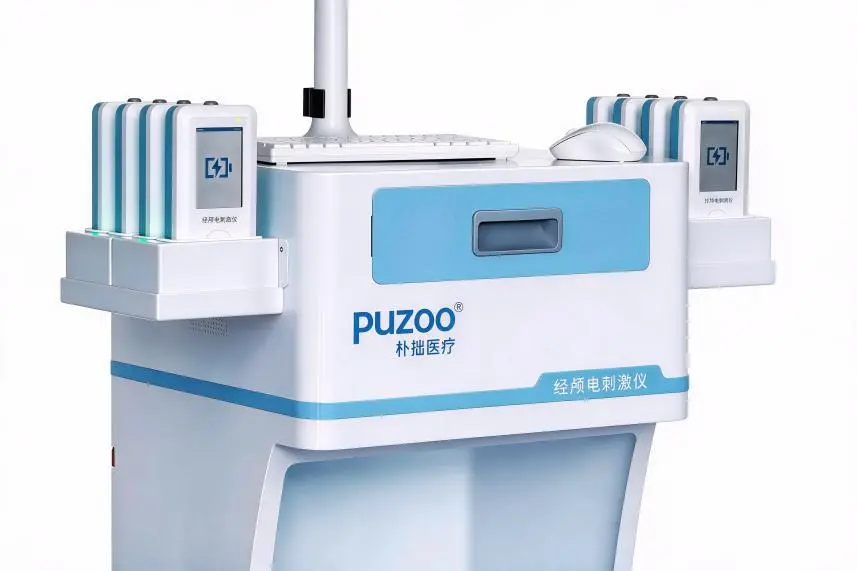
Evaluation and Training Integrated Management Software
·LAN data sharing, controlling up to 12 terminal hosts simultaneously
·Batch processing and group processing: Sending treatment prescriptions to multiple terminals at once, configuring 8 patient information for a single terminal at a time, and efficiently conducting group therapy
·Built in cognitive assessment scale and cognitive training tasks to achieve pre - and post-treatment effect evaluation and tracking
·The system solution comes with a human brain anatomical localization map and detailed textual description to assist operators in precise localization
·Automated output of treatment records, evaluation reports, and cognitive training records, supporting custom report templates