tFUS
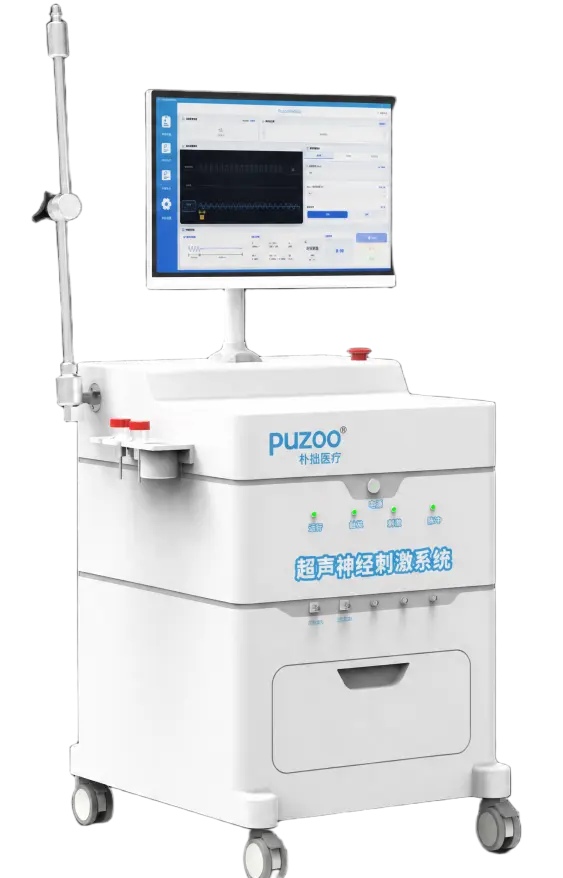
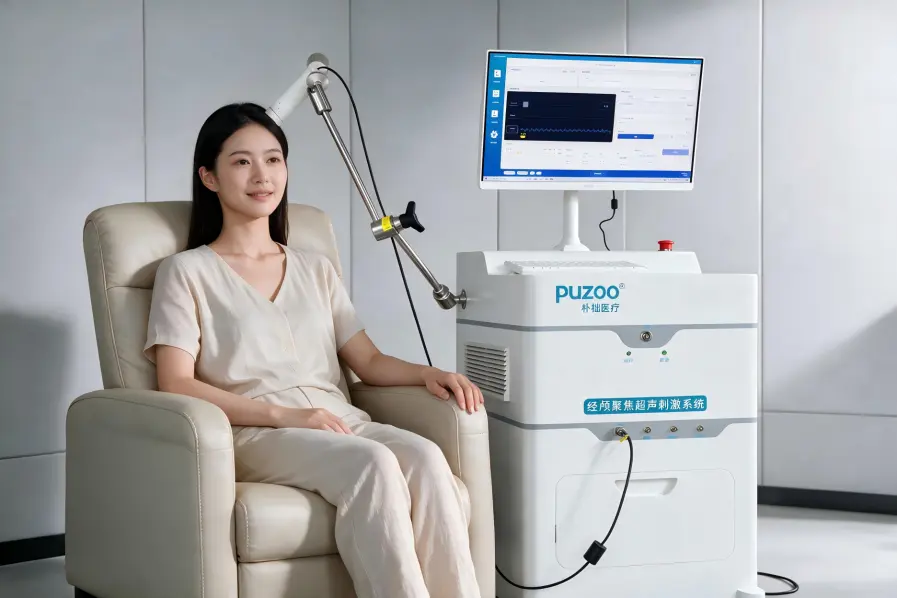
Transcranial Focused Ultrasound Stimulator (tFUS) is a new generation non-invasive neuromodulation device launched by Park Chung Medical. The device outputs low-intensity focused ultrasound through an ultrasound transducer, penetrates the skull and precisely focuses on the intracranial target area. The mechanical effect of sound waves regulates the neuronal membrane and mechanosensitive ion channels, achieving reversible regulation of excitability in specific brain regions. The device supports wide range adjustment of fundamental frequency from 100kHz to 8MHz, multi-level programmable pulse and stimulation parameters, maximum sound intensity Isppa ≤ 30W/cm ², and output power from 0 to 200W. It is equipped with multiple specifications of focused ultrasound transducers and collimators, and provides dual signal output for pulse synchronization and stimulation synchronization. It is compatible with EEG and fNIRS synchronous acquisition, providing a complete solution for multimodal brain function research and closed-loop neural regulation.
videoProduct Advantages

Millimeter level focusing with deep reach
Focused ultrasound penetrates the skull and accurately targets deep brain regions, with a spatial resolution of millimeter level, breaking through the limitations of traditional electromagnetic regulation where depth and accuracy cannot be achieved simultaneously

Broadband adjustable and abundant power
The fundamental frequency is adjustable within a wide range of 100kHz to 8MHz, the output power is continuously adjustable from 0 to 200W, and the maximum sound intensity Isppa is ≤ 30W/cm ², balancing penetration depth and safety boundary

Level 3 Timing · Free Arrangement
The three-level timing parameters of pulse stimulation experiment are fully programmable, supporting the free arrangement and precise reproduction of complex stimulation paradigms

Multimodal synchronization and closed-loop control
Pulse synchronization and stimulation synchronization dual signal output, compatible with EEG and fNIRS synchronous acquisition, providing hardware foundation for closed-loop neural regulation of "detection and treatment at the same time"
What is transcranial focused ultrasound stimulation (tFUS) technology?
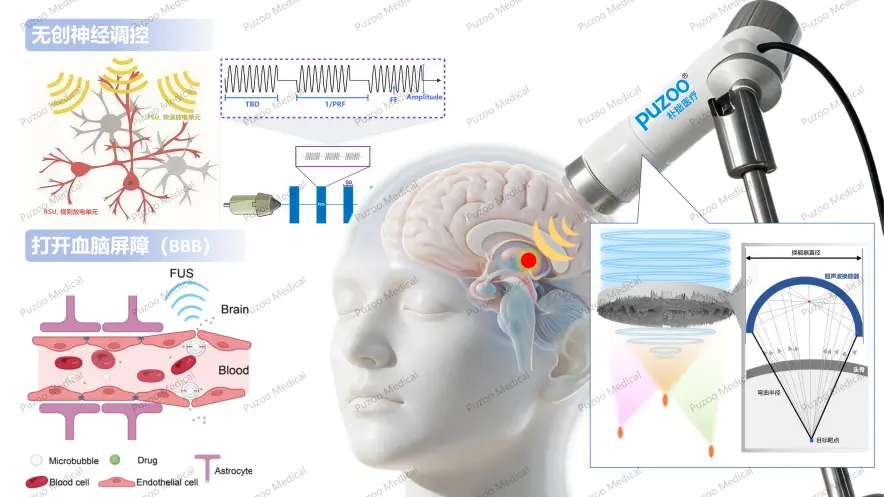
TFUS (also known as TUS or LIFUS) is a non-invasive neural regulation technology that utilizes acoustic energy to achieve millimeter level precision targeted regulation of brain regions. The device uses the piezoelectric effect to generate sound waves through vibrations caused by current flowing through a crystal. The sound energy is precisely focused onto a point space through an ultrasonic transducer, thereby achieving precise stimulation of specific areas of the brain. Ultrasound transducers use rhythmic low-intensity ultrasound pulses to directly act on neuronal membranes and mechanosensitive ion channels, thereby regulating neuronal excitability and triggering dynamic changes in the neurotransmitter system.
Research has shown that the spatial resolution of tFUS can reach millimeter level (1-5mm), significantly better than TMS's centimeter level (3-5cm) and tDCS (5-7cm), and can act on subcortical deep brain structures without losing spatial resolution. Preclinical and clinical studies have shown that tFUS is safe and effective within established parameter ranges, and can be used for causal mechanism research of brain functions such as perception, movement, cognition, and emotion. It also shows important prospects in neural regulation, blood-brain barrier opening, and targeted drug delivery.
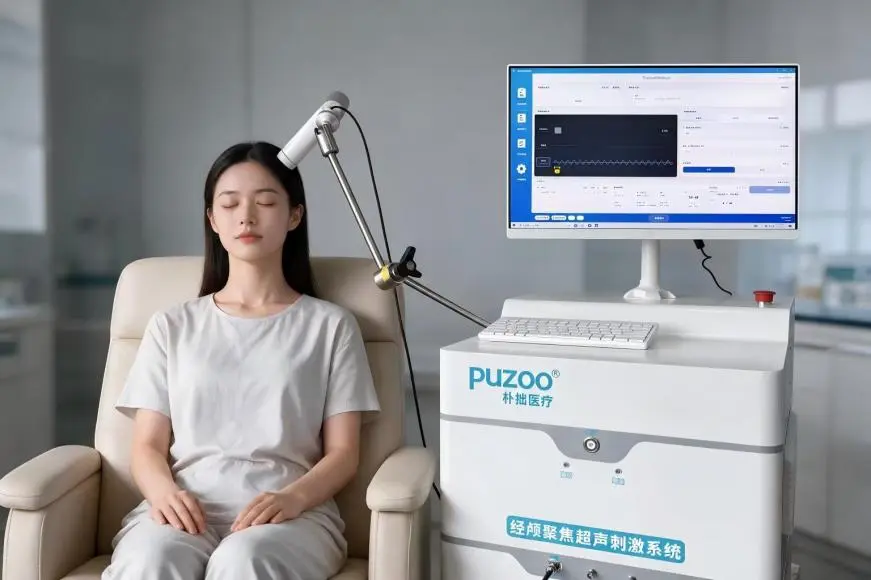
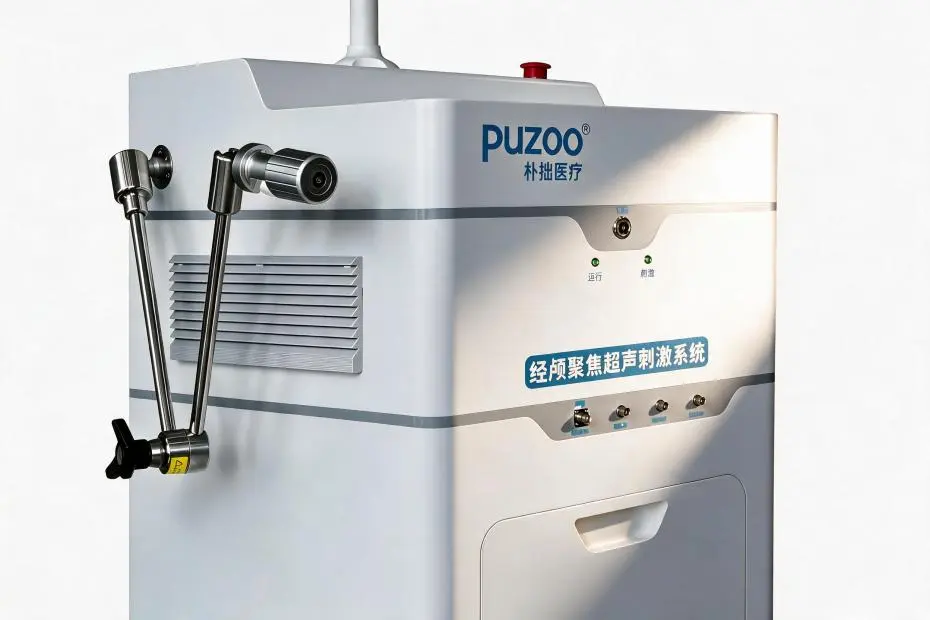
Ultrasonic stimulation system host
·The fundamental frequency is adjustable within a wide range of 100kHz to 8MHz, with precise steps up to 10kHz
·Provide two types of fundamental phase: 0 ° and 180 °, to meet the requirements of different acoustic field regulation and research paradigms
·Output power continuously adjustable from 0 to 200W, maximum sound intensity Isppa ≤ 30W/cm ², clear and controllable safety boundary
·Equipped with status indicator lights, real-time indication of ultrasound transmission status, making the treatment and experimental process clear at a glance
·Focused ultrasound transducers with different diameters (30mm/60mm) meet the clinical trial needs of both animals and humans
·Equipped with a collimator compatible with the ultrasound transducer, ensuring precise projection of the sound beam onto the target brain area
Level 3 Timing · Fully Programmable Parameters
Pulse Level: Pulse duration and pulse period are adjustable. Continuous pulses (IPI=0) and intermittent pulses (PRT=1 μs~10 s, step size 1 μs) are supported, with the number of pulses M=1~10000.
Stimulation Level: Stimulation duration SD=M×PRT; stimulation repetition period SRT=SD+ISI. For continuous stimulation, ISI=0 and SRT=SD; for intermittent stimulation, SRT=1 s~60 s (step size 0.1 s).
Experiment Level: Number of stimulations C=1~10000; experiment duration TD=C×SRT. The whole procedure of one complete experiment is fully programmable.
Three‑level Timing Architecture of Pulse‑Stimulation‑Experiment: Enables free arrangement and precise reproduction from single pulses to complete experimental protocols.
Multimodal synchronization and closed-loop control
·The synchronization signal includes pulse synchronization output and stimulus synchronization output, which can be flexibly selected according to research needs
·Compatible with EEG and fNIRS synchronous acquisition, supporting multimodal joint research of electrophysiology and hemodynamics
·Provide hardware foundation for the closed-loop neural regulation of "ultrasound EEG" and assist in the exploration of personalized regulation of "detection and treatment at the same time"
·Trigger control mode: There are two modes to choose from: internal trigger and external trigger, which are compatible with autonomous solutions and third-party device linkage
·Equipped with independent parameter control upper computer software, it can be conveniently used on the PC end, combining ease of use and reliability
·Information management function: Complete recording of participant information and stimulus records for each stimulus, facilitating experimental traceability and data management