Near-Infrared Brain Functional Imaging System
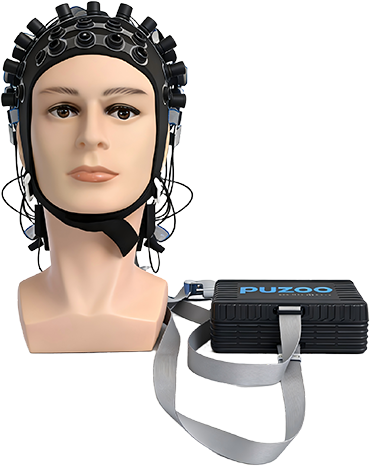
PZ-NIR16 is a multi-channel continuous wave functional near-infrared brain functional imaging system based on time-division square wave locking technology developed by Park Chung Medical. The system controls the wavelength switching of the light source through time-division square wave simulation locking technology, using 750nm and 850nm dual wavelength near-infrared light that is absorbed and scattered by brain tissue and received by the detector as the information carrier. Based on the modified Beer Lambert law, the light signal is converted into a relative change signal of blood oxygen, which can detect the original light intensity signal and blood oxygen signal in real time. The system is equipped with 16 dual wavelength LED light sources and 16 silicon photodiode detectors. The optical cap supports up to 52 test channels and integrates a six axis motion sensor. It supports three data formats:. csv/. edf/. nirs for saving and hardware TTL and TCP/IP multimodal synchronization. The configuration is flexible, the operation is stable and reliable, and it can be applied to various experimental scenarios.
videoProduct Advantages

16 × 16 multi-channel, full brain coverage
16 light sources and 16 detector arrays, with a light pole cap supporting up to 52 test channels, covering the entire area of the human brain
Time division square wave locking and signal robustness
Dual wavelength switching combined with eight levels of gain and four levels of signal quality evaluation, one click automatic gain, optimal channel availability

Flexible and efficient light pole configuration
Built in 6 sets of international lead preset templates, supporting manual configuration and custom template saving, experimental design can be adjusted and used immediately

Flexible and efficient light pole configuration
Three data formats are compatible with open-source tools such as Homer2, supporting hardware TTL and TCP/IP synchronization for EEG and stimulus presentation software